

Why These Two Checks Matter More Than Most Drivers Realize
Tyres are the only contact point between your vehicle and the road, yet tyre pressure and tread depth are among the most consistently neglected checks in everyday car care. According to the National Highway Traffic Safety Administration (NHTSA), tyre-related issues contribute to hundreds of thousands of crashes annually in the United States. Most of those incidents are preventable with simple, regular inspection.
Neither check requires special tools beyond a pressure gauge - which costs a few dollars - and the penny or quarter test for tread depth. What both require is consistency. Drivers who build these checks into a routine, rather than waiting for a warning light or a visibly flat tyre, catch problems before they become expensive or dangerous. For a broader look at vehicle upkeep, see our seasonal car maintenance checklist that covers tyres, fluids, brakes, and lights across the year.
Getting Tyre Pressure Right
The biggest misconception about tyre pressure is where to find the correct number. The figure moulded into the tyre sidewall is the maximum pressure the tyre can hold - not the target. Your vehicle's recommended pressure is found on a sticker inside the driver's door jamb or in the owner's manual. Front and rear tyres often carry different recommended pressures, so check both.
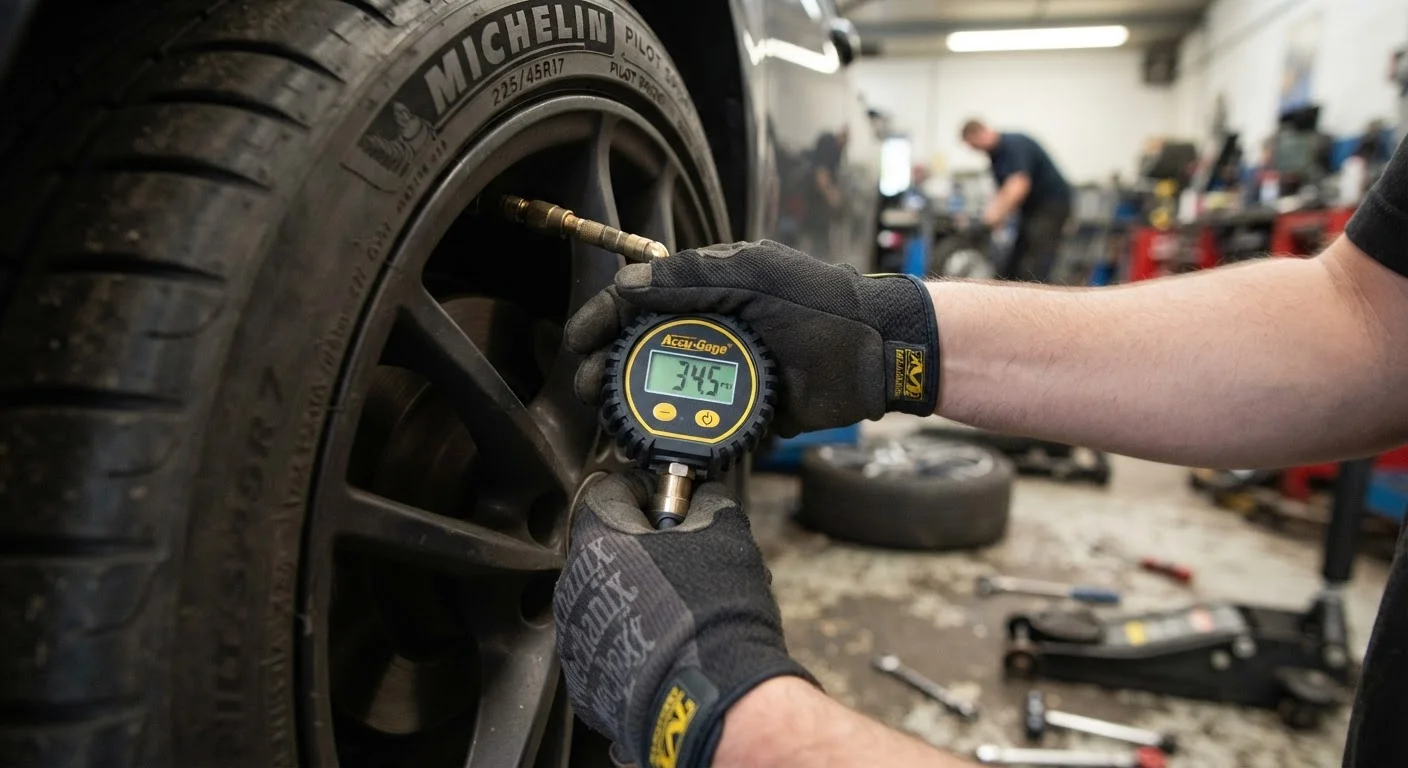
Check tyre pressure monthly, using a quality gauge when tyres are cold.
Pressure naturally fluctuates with temperature and gradual air permeation through the tyre. Monthly cold checks give you an accurate baseline before driving raises internal temperature and temporarily inflates readings.
Use the door jamb sticker - not the tyre sidewall - as your pressure target.
The sidewall figure is the tyre's maximum rated pressure, not the manufacturer's recommended operating pressure for your vehicle. Using it as a target leads to overinflation, reduced contact patch, and a harsher ride.
Inspect tread depth at all four corners, including the spare.
Wear is rarely uniform across all four tyres, and an uneven pattern often reveals an underlying problem. Including the spare in your inspection prevents an unpleasant surprise when you actually need it.
Rotate tyres at manufacturer-recommended intervals to promote even tread wear.
Front tyres typically wear faster than rear tyres, especially on front-wheel-drive vehicles, due to steering and braking forces. Rotation extends the usable life of a full set by evening out wear patterns.
Adjust pressure after significant temperature changes, not just when the TPMS light appears.
TPMS alerts trigger at a 25% pressure deficit - well past the point where handling and fuel economy are already affected. Proactive seasonal adjustments keep you within the optimal range before problems compound.
If you drive a high-mileage vehicle, tyre pressure becomes even more consequential. Underinflated tyres wear unevenly and can stress suspension components that are already working harder with age. Our guide on keeping a high-mileage car roadworthy covers how maintenance priorities shift as vehicles age.
One frequently overlooked factor: your vehicle's Tyre Pressure Monitoring System (TPMS) only alerts you when pressure drops roughly 25% below the recommended level. By that point, the tyre is already significantly underinflated. Don't rely on TPMS as your primary check - use a gauge. Learn what the TPMS dashboard icon and other warning lights mean in our warning lights guide.
Measuring Tread Depth Without a Gauge
Tread depth determines how effectively a tyre channels water, grips road surfaces, and maintains control in wet or emergency conditions. In most US states, the legal minimum is 2/32 of an inch - measured by the raised wear indicators built into tyre grooves. If those indicators are flush with the surrounding tread, the tyre must be replaced.
A practical field test: insert a penny into the tread groove with Lincoln's head pointing down. If the top of his head is fully visible, the tread has reached 2/32 inch or less - legally and practically at its limit. For a more conservative assessment, use a quarter: if Washington's head is fully visible, you're at approximately 4/32 inch, a threshold many tyre safety experts recommend as a practical replacement point, particularly for wet-weather driving.
Uneven tread wear across the tyre's width tells you something beyond age. Wear concentrated at the centre typically indicates chronic overinflation. Wear at both edges suggests underinflation. Wear on one edge points to an alignment or camber issue. Addressing the root cause matters as much as replacing the tyre itself. Before any significant drive, tread and pressure checks are part of the pre-trip vehicle safety check worth running through.
Building the Habit: How Often and When
Monthly checks are the practical standard for most drivers. Add a check before any road trip and whenever the season changes - temperature swings are a significant driver of pressure loss. A drop of 10°F can reduce tyre pressure by approximately 1 PSI. That may sound minor, but across four tyres on a cold winter morning, it adds up quickly.
Check pressure when tyres are cold - meaning the vehicle has been parked for at least three hours or driven fewer than a mile at low speed. Driving heats the air inside the tyre, temporarily raising pressure readings and making an accurate cold check impossible.
If you're preparing for winter conditions specifically, tyre pressure and tread deserve extra attention. Our article on pre-winter vehicle checks walks through cold-weather preparation in detail. And if you've been told checking more often is unnecessary, our piece on common car maintenance myths may challenge a few assumptions you've relied on.
This article is for general informational purposes only. Always refer to your vehicle owner's manual and consult a qualified mechanic for advice specific to your vehicle's condition.
The content on this site is for informational purposes only and is not a substitute for professional advice. Always consult a qualified professional for guidance specific to your situation.