

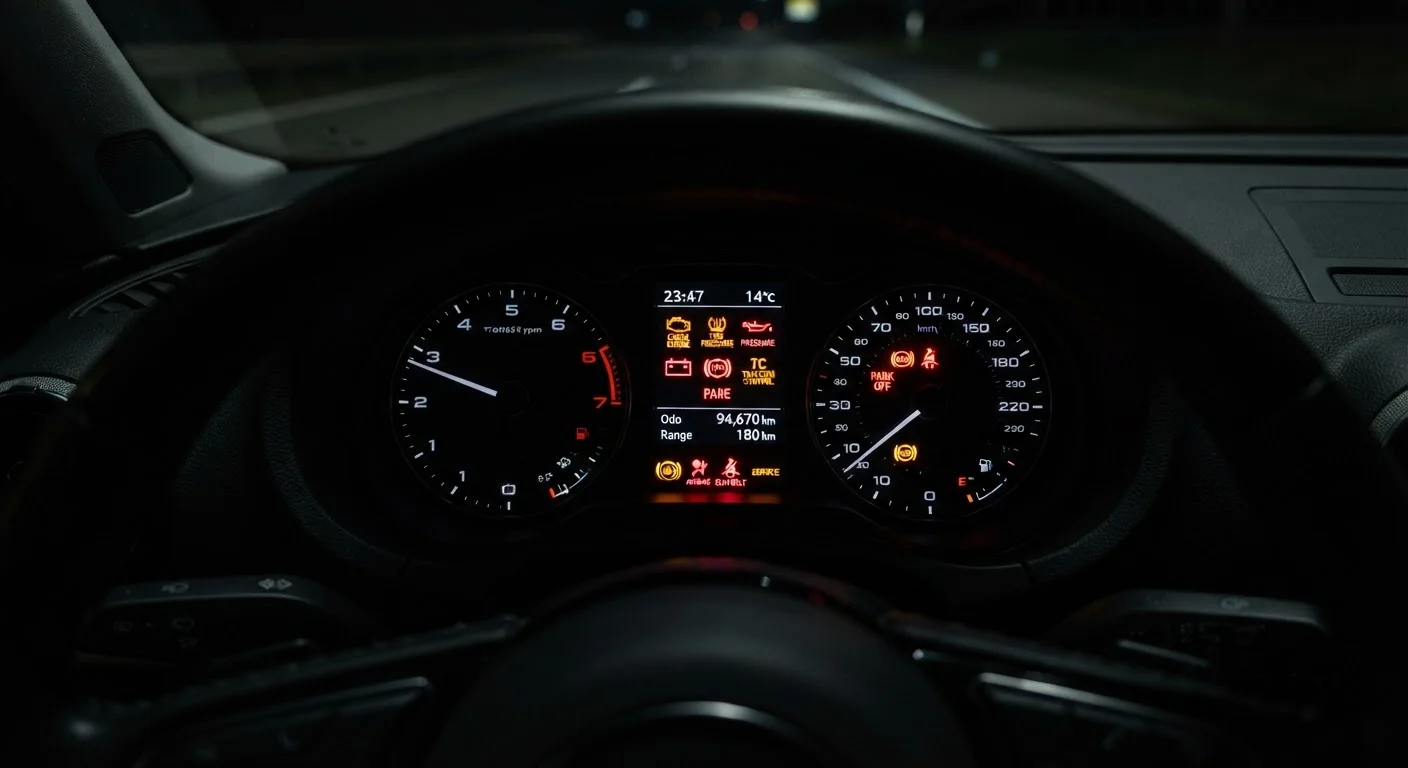
Why Warning Lights Exist (and Why You Shouldn't Ignore Them)
Modern vehicles are equipped with an OBD system that continuously monitors dozens of sensors - from your engine's air-fuel mixture to your brake fluid pressure. When something falls outside normal operating parameters, a warning light appears on your instrument cluster. These lights aren't suggestions; they're the vehicle's built-in communication system.
The problem is that most drivers either panic at every light or dismiss them entirely. Neither response serves you well. A basic grasp of what each symbol means - and how urgently it needs attention - can protect both your safety and your wallet. For context on how these systems tie into broader vehicle safety technology, see Understanding Your Car's Safety Systems.
OBD-II
On-Board Diagnostics, second generation - a standardized system present in most vehicles sold in the US after 1996 that monitors engine and emissions performance and stores fault codes retrievable by a scan tool.
Diagnostic Trouble Code (DTC)
A standardized code stored by the OBD-II system when a sensor reading falls outside normal parameters. A mechanic or OBD scanner tool can read these codes to identify the source of a warning light.
TPMS
Tyre Pressure Monitoring System - a sensor-based system required on US passenger vehicles since 2008 that alerts the driver when tyre pressure drops significantly below the recommended level.
Catalytic Converter
An emissions control device in the exhaust system that converts harmful combustion byproducts into less harmful gases. Engine misfires can cause unburned fuel to damage it, making it expensive to replace.
ABS
Anti-lock Braking System - a safety system that prevents wheel lockup during hard braking, helping the driver maintain steering control. A fault in the system does not disable the standard brakes.
Alternator
A generator driven by the engine belt that recharges the battery and powers the vehicle's electrical systems while the engine is running. A failing alternator triggers the battery warning light.
The Most Common Warning Lights, Explained
Not all warning lights carry the same urgency. Here's a practical breakdown of the lights most drivers encounter:
| Color: Red | Stop or act immediately - safety-critical |
| Color: Amber/Yellow | Schedule service soon - monitor closely |
| Flashing vs. Steady | Flashing always indicates higher urgency |
| CEL: Steady | Service needed; drive cautiously to a mechanic |
| CEL: Flashing | Reduce speed; seek service promptly |
| TPMS trigger threshold | Typically 25% below recommended pressure (US NHTSA TPMS regulation standard) |
| OBD-II required in US since | 1996 (all passenger cars and light trucks) (US EPA mandate) |
Check Engine Light (CEL)
This amber light - shaped like an engine outline - is one of the most misunderstood indicators. A steady CEL can signal anything from a loose gas cap to a failing catalytic converter. A flashing CEL is more serious and typically indicates an active engine misfire that can damage your catalytic converter. If it's flashing, reduce speed and have the vehicle inspected promptly. In both cases, a mechanic can retrieve the specific diagnostic trouble code with an OBD-II scanner.
Oil Pressure Warning
This red light - resembling an old-fashioned oil can - signals low oil pressure, not necessarily low oil level. If it illuminates while driving, pull over safely and shut off the engine as soon as possible. Running an engine with low oil pressure can cause catastrophic internal damage within minutes. Check the oil level and other critical fluids before restarting.
Temperature Warning
A red thermometer symbol means your engine is overheating. Pull over, turn off the engine, and do not open the radiator cap while the engine is hot. Overheating can warp cylinder heads - an expensive repair. Let the engine cool for at least 30 minutes before inspecting coolant levels.
Battery / Charging System
This red battery symbol suggests the charging system isn't maintaining adequate voltage - often a failing alternator or a corroded battery connection, not necessarily a dead battery. Your vehicle may continue to run briefly on battery power alone, but it will eventually stall. Have it diagnosed the same day.
TPMS (Tyre Pressure Monitoring System)
An amber horseshoe-shaped icon with an exclamation point indicates one or more tyres are significantly underinflated (typically 25% or more below the recommended pressure). Underinflated tyres affect handling and fuel economy and can fail at highway speeds. Check all four tyres and inflate to the pressure listed on your door jamb sticker - not the maximum printed on the tyre sidewall. For a full breakdown of tyre safety, see Tyre Pressure, Tread Depth, and the Checks Most Drivers Skip.
ABS Warning
The amber ABS light means the anti-lock braking system has detected a fault. Your standard brakes still work, but the ABS function - which prevents wheel lockup during hard stops - may be compromised. Avoid high-speed or emergency driving until a technician inspects the wheel speed sensors and module.
Brake System Warning
A red exclamation mark inside a circle often indicates the parking brake is engaged - disengage it first. If the light remains on while driving, it may signal low brake fluid or a hydraulic fault. This is a safety-critical system; have it inspected immediately.
Red vs. Amber: A Simple Priority Framework
Most modern vehicles use a color-coding system to signal urgency:
- Red lights signal immediate action required. Stop driving when safe and address the issue before continuing.
- Amber/yellow lights signal a fault that needs attention soon - typically within a day or two - but doesn't require you to stop immediately in most cases.
- Green or blue lights are status indicators (headlights on, cruise control active) and are not warnings.
Some vehicles also use icons that flash rather than glow steadily - a flashing light almost always indicates greater urgency than a steady one of the same color.
If you drive a high-mileage vehicle, sensors and warning systems can become more active over time. Understanding which warnings indicate wear patterns is especially relevant - Keeping a High-Mileage Car on the Road covers the maintenance priorities that shift as vehicles age.
Before any significant trip, a quick scan of your dashboard is part of a responsible pre-departure routine. See Your Pre-Trip Vehicle Safety Check for a structured walkthrough.
The content on this site is for informational purposes only and is not a substitute for professional advice. Always consult a qualified professional for guidance specific to your situation.